Rafael Otto · 10 September 2026
Pelora River Improvements Spur Artist-Led Tech Initiatives for Youth Employment
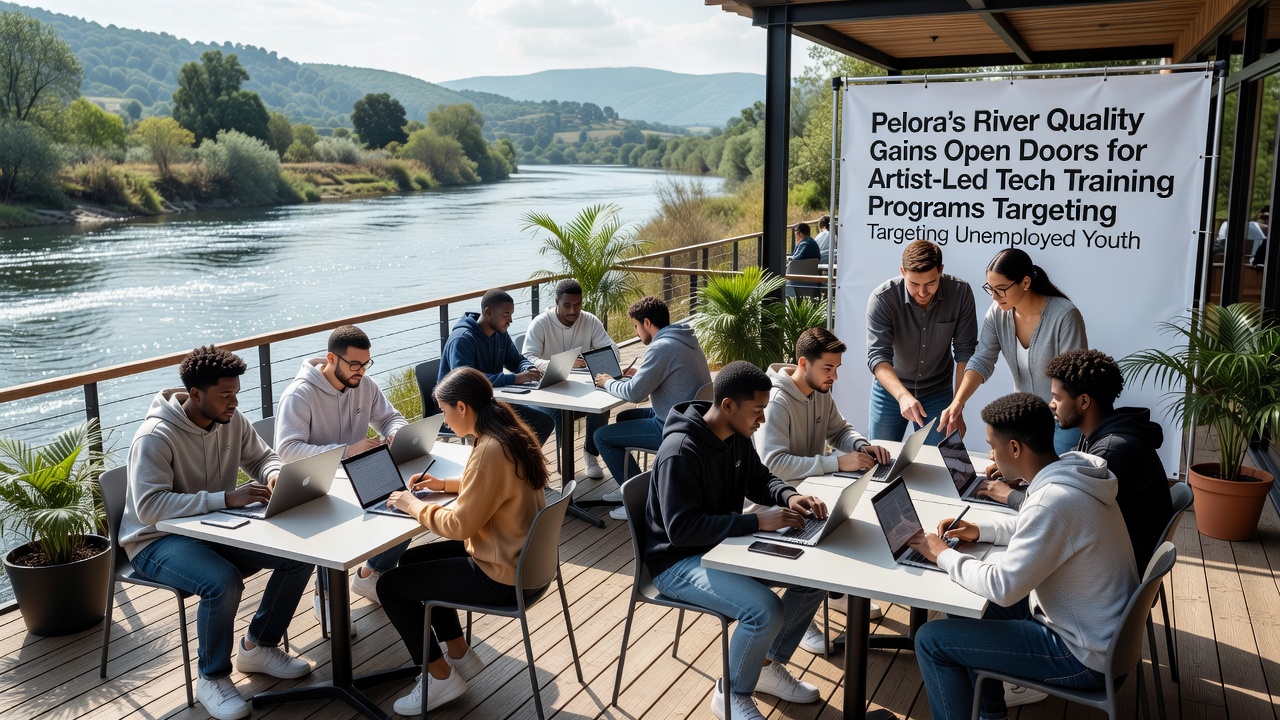
Improved water conditions along the Pelora river have coincided with expanded opportunities for artist-led technology training programs that focus on unemployed youth in the region, and data from local monitoring stations show measurable gains in dissolved oxygen levels and reduced pollutant concentrations since the start of restoration projects in 2023. These environmental shifts have allowed community organizations to repurpose former industrial riverbank sites into flexible spaces where visual artists collaborate with digital instructors to deliver hands-on coding and design workshops.
Local records indicate that river quality metrics reached key thresholds by early 2025, and this progress aligned with increased applications for training slots among residents aged 18 to 25 who lack formal employment. Program coordinators report that sessions combine traditional media techniques with software tools for 3D modeling and interactive installations, and participants gain credentials recognized by regional employers in the creative tech sector.
Environmental Data Driving Site Availability
Monitoring reports compiled by the Pelora Environmental Authority document a 34 percent drop in heavy metal concentrations at three sampling points between 2022 and 2025, while bacterial counts fell below recreational safety limits for the first time in over a decade. These figures prompted the release of previously restricted parcels along the southern embankment for mixed-use community projects, and several artist collectives secured permits to convert warehouse structures into training studios equipped with both analog fabrication tools and networked computers.
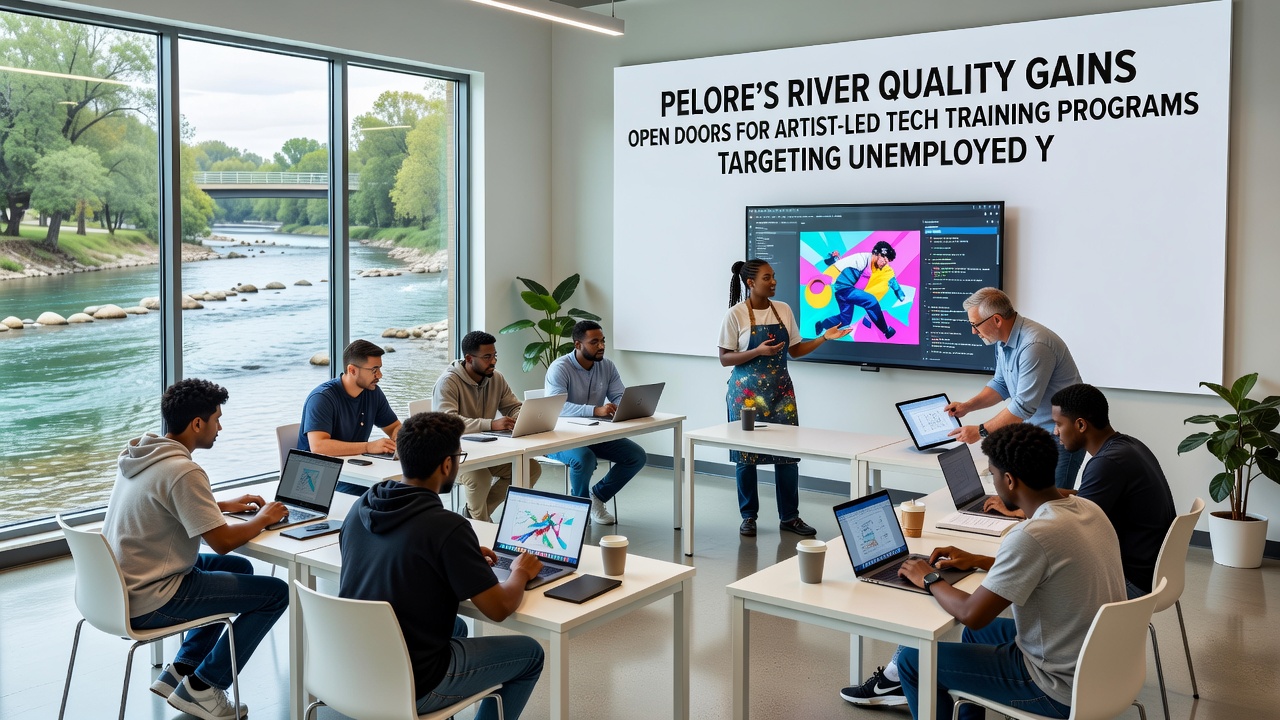
One initiative that began pilot operations in March 2025 now runs cohorts of twelve participants each quarter, and curriculum modules cover topics ranging from sensor-based data visualization to augmented reality overlays that highlight river ecology. Trainers note that the physical proximity to the restored waterway provides tangible examples for lessons on environmental monitoring and sustainable design practices.
Training Program Structure and Enrollment Trends
Enrollment statistics released by the Pelora Youth Skills Network show that 187 individuals registered for artist-facilitated tech courses during the 2025 calendar year, and completion rates reached 78 percent across the four active sites. Sessions typically span eight weeks with four meetings per week, and participants alternate between studio work on digital prototypes and field exercises that collect water samples for analysis through custom-built apps.
Partnership agreements signed in late 2025 with three regional design firms guarantee interview opportunities for graduates, while a separate agreement with the European Digital Skills Organisation supplies standardized assessment frameworks. Data from the network indicates that 62 percent of completers secured related employment or further apprenticeships within six months of finishing the program.
September 2026 Expansion Plans
Planning documents submitted to municipal authorities outline an expansion scheduled for September 2026 that will add two additional river-adjacent locations and increase annual capacity to 320 participants. Funding for equipment upgrades draws from a combination of regional development grants and private contributions tied to corporate social responsibility commitments in the creative industries.
Program designers emphasize integration of real-time river sensor data into student projects, and preliminary tests conducted during the summer of 2025 demonstrated that live feeds can feed into interactive installations displayed at public events along the waterfront. Observers from the Pelora Technical University have begun documenting these activities for a forthcoming case study on interdisciplinary education models.
Broader Regional Context
Comparable efforts in other riverine communities across the continent have shown similar linkages between ecological recovery and workforce development, according to a 2024 report issued by the European Environment Agency. Those findings highlight how restored public spaces can serve as low-cost venues for skills programs that blend artistic practice with technical instruction, and Pelora officials have referenced the same report when justifying permit approvals for new training sites.
Industry associations such as the Creative Tech Alliance have expressed interest in replicating elements of the Pelora model, and representatives visited the river sites in July 2025 to observe workflow patterns between artists and youth cohorts. Their subsequent white paper notes that artist involvement often increases participant retention compared with purely technical formats.
Conclusion
River quality gains documented through sustained monitoring have directly supported the emergence of artist-led technology training programs that target unemployed youth in Pelora, and enrollment alongside employment placement data reflect measurable activity through 2025 with further scaling planned for September 2026. The integration of environmental data into curriculum elements continues to shape how these programs operate along the restored waterway.