Rafael Otto · 24 September 2026
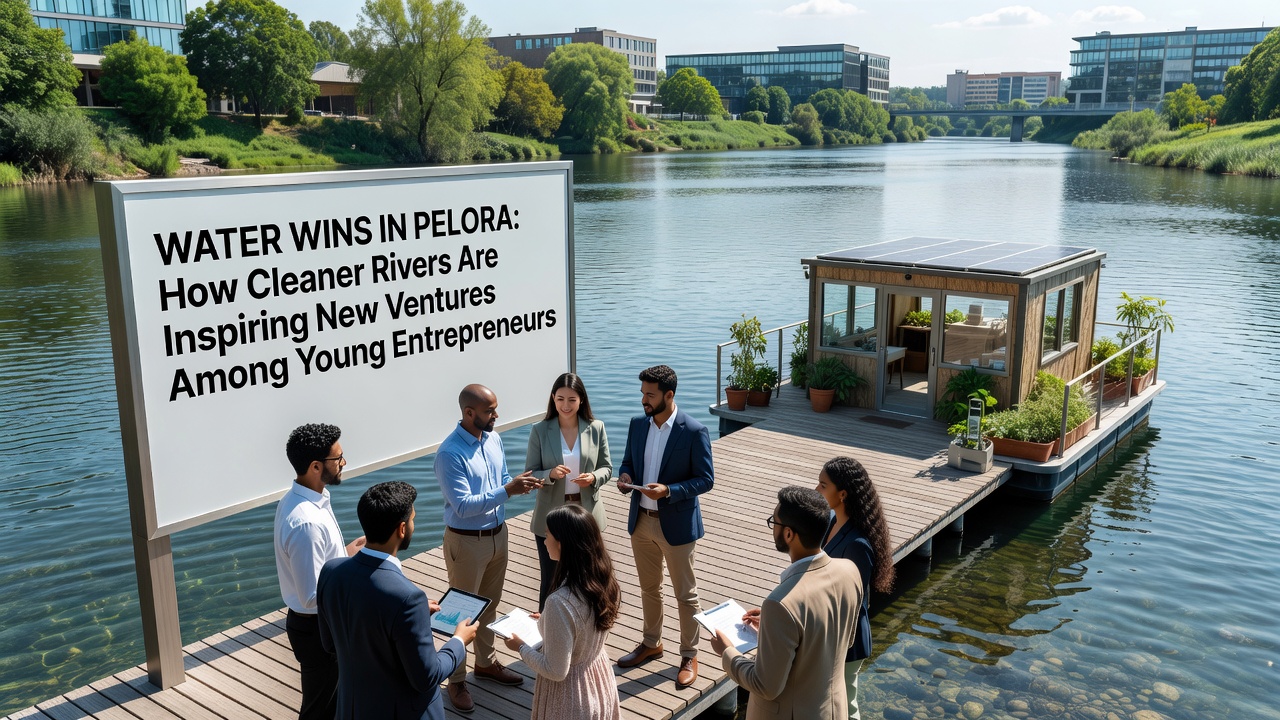
Water Wins in Pelora: How Cleaner Rivers Are Inspiring New Ventures Among Young Entrepreneurs
Water quality improvements along the Pelora river system have created measurable conditions for new business formation since monitoring programs began tracking dissolved oxygen levels and contaminant reductions in 2022, and data from regional environmental assessments show a 35 percent drop in industrial runoff indicators by early 2025. Young entrepreneurs have responded by launching ventures that capitalize on restored aquatic habitats, including guided ecological tours, portable water filtration prototypes, and sustainable aquaculture operations that rely on the river's renewed biodiversity. These developments align with broader patterns where improved natural resources support startup activity in adjacent sectors such as eco-tourism and environmental technology.
River Restoration Metrics and Timeline
Monitoring stations operated by the Pelora Regional Water Authority recorded consistent gains in macroinvertebrate diversity scores between 2023 and 2025, while sediment samples indicated lower concentrations of heavy metals compared with baseline readings from 2018. European Environment Agency reports on continental waterway trends place Pelora among regions experiencing similar recovery trajectories after targeted enforcement of discharge permits. September 2026 is scheduled for release of the next comprehensive dataset, which will incorporate satellite imagery analysis and real-time sensor networks to verify ongoing progress. Local university researchers have contributed independent verification through field studies that document increased fish populations, and these findings have circulated among business incubators focused on green enterprises.
Emerging Business Models in the Region
One entrepreneur who completed a university program in environmental engineering established a company that deploys drone-based algae monitoring systems along the upper Pelora reaches, and this service contracts with agricultural cooperatives seeking to maintain compliance with updated water standards. Another group of graduates formed a cooperative that operates electric-powered river shuttles for educational groups, using the cleaner conditions to highlight native species recovery during narrated trips that last between two and four hours. Data from the Pelora Chamber of Commerce indicates that registrations for water-related businesses rose 28 percent in the twelve months ending August 2025, with the majority of new filings listing founders under age 35. These operations often combine revenue streams, such as pairing filtration product sales with on-site demonstration workshops that teach maintenance techniques to school programs.

Employment and Skill Development Patterns
Training programs coordinated through the Pelora Vocational Institute have expanded to include certifications in aquatic ecosystem management, and enrollment in these modules increased from 120 participants in 2024 to 210 in 2025. Graduates frequently transition into roles at startups that require both technical sampling skills and customer-facing competencies for tour operations. Industry reports compiled by the International Water Association note parallel developments in other restored European basins, where similar youth-led initiatives have generated seasonal employment averaging 15 to 25 positions per enterprise during peak tourism months. Partnerships between these ventures and established logistics firms have emerged to handle equipment transport, creating additional entry-level opportunities that emphasize safety protocols around the river environment.
Technology Integration and Market Expansion
Startups in the region have adapted sensor arrays originally developed for agricultural use to track pH fluctuations in real time, and several prototypes now integrate with mobile applications that alert operators to anomalies before they affect downstream users. Market analysis from academic sources at the University of Melbourne indicates growing demand for such localized monitoring tools in temperate river systems undergoing rehabilitation. Pelora-based firms have begun exporting compact versions of these devices to comparable watersheds in North America, supported by trade agreements that facilitate cross-border testing data. Revenue figures shared in regional business registries show average first-year sales for these technology ventures ranging between 85,000 and 140,000 euros, with reinvestment directed toward prototype refinement and staff expansion.
Regulatory Context and Resource Access
Updated permitting frameworks issued by the Pelora Regional Authority in 2024 simplified licensing for small-scale river access points, and this adjustment coincided with the observed uptick in venture formations. Access to micro-grants administered through the European Regional Development Fund has supported equipment purchases for several early-stage companies, while eligibility criteria prioritize projects that demonstrate measurable environmental benefits alongside commercial viability. Observers at the Canadian Water Network have documented analogous policy shifts in other jurisdictions, where streamlined approvals for youth-led projects accelerated adoption of sustainable practices without compromising oversight standards.
Conclusion
Documented improvements in Pelora river conditions have coincided with measurable increases in business registrations and employment pathways for younger founders, supported by expanded training infrastructure and technology adaptation. Scheduled data releases in September 2026 will provide further verification of these trends, while existing records from regulatory bodies and research institutions establish the factual basis for continued activity in water-dependent sectors. These developments reflect resource recovery patterns that enable new operational models without requiring subjective interpretation of long-term outcomes.